Colored contact lenses are lenses designed to change or enhance the apparent color of the iris. Some are purely cosmetic; others also correct vision. Their pigments sit within the lens material, while the clear central area allows light to pass through the pupil. The effect can look subtle in daylight or striking beneath studio lights. Not every shade looks the same on every eye.
The market is growing, but market forecasts are not safety evidence. Grand View Research’s 2023 market analysis estimated the global colored contact lenses market at about US$4.5 billion, with projected growth through 2030. Separately, the U.S. Centers for Disease Control and Prevention estimates that more than 45 million Americans wear contact lenses. These figures describe demand and use, not the safety of any particular product. That distinction matters.
“Contact lenses are not cosmetics or over-the-counter merchandise. They are medical devices that require a prescription and proper fitting by an eye care professional,” said Dr. Andrea Thau, former president of the American Optometric Association. Her warning applies even when a lens has no vision-correction power. A poor fit can irritate the eye, and careless handling can introduce infection-causing germs. Clean hands matter. So does a proper lens-care routine. This guide explains how colored contact lenses work, what their labels mean, and what questions to ask an eye-care professional. One limitation deserves honesty: a beautiful product photo cannot show how a lens will fit your eye.
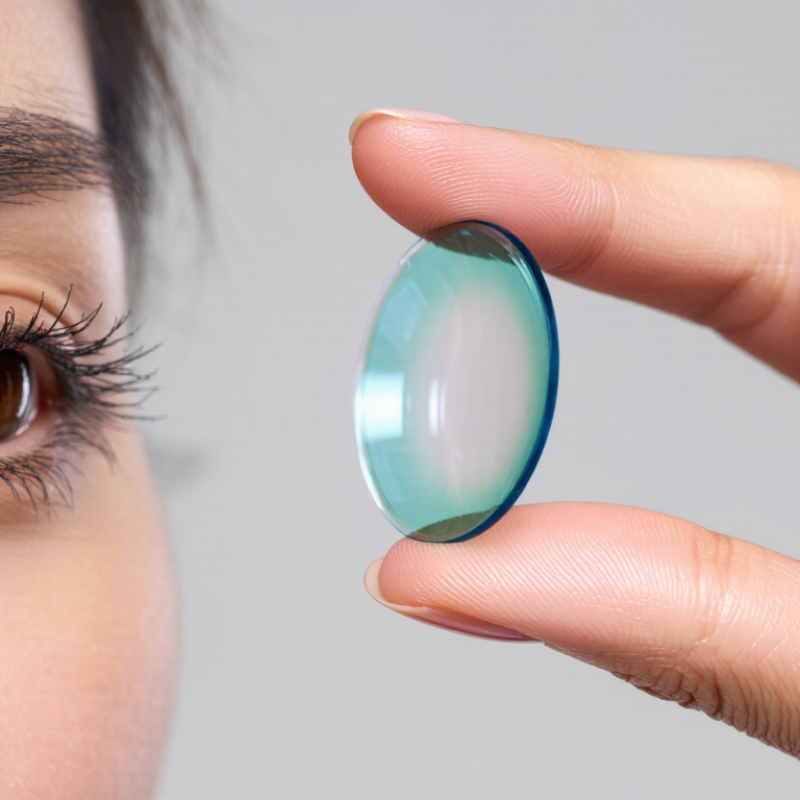
Colored contact lenses are thin, curved lenses worn over the eye’s surface to change or enhance the visible color of the iris. Some use transparent tints to deepen a person’s natural shade; others use more opaque patterns to create a noticeable change. The clear area over the pupil allows light to enter. Appearance is only part. Colored lenses may be made with vision correction or without it, depending on the wearer’s needs and the lens design.
Their purpose can be cosmetic, corrective, or both. A person might choose a subtle tint for everyday wear, while another may want a more dramatic look for a special occasion. In either case, a lens still needs to fit the eye properly. Fit matters. A poorly fitting or unclean lens can irritate the eye and may affect vision. Even a lens without corrective power should be selected with guidance from an eye-care professional, who can assess fit and explain safe cleaning and wear. It can be tempting to treat colored lenses like makeup, but they rest directly on a sensitive part of the eye. That difference is easy to underestimate. Proper care and a suitable fit matter as much as the color.
Colored contact lenses change the iris’s visible pattern, not the eye’s natural structure.
A translucent tint can deepen an existing shade while leaving its texture visible. An opaque design can make a stronger change, even over dark irises. Many lenses also use a darker outer ring to sharpen the iris edge. The center stays clear for the pupil.
Small details matter: a lens that shifts off-center may look uneven or blur vision. The effect is not perfectly predictable; lighting, pupil size, and natural eye color all influence what others see.
Subtle shifts matter.
Fit and material matter as much as color.
The U.S. Food and Drug Administration classifies decorative lenses as medical devices, and advises users to get professional fitting and instructions. Colored lenses are not risk-free because they are cosmetic. A CDC report estimated about 1 million U.S. outpatient and emergency visits for keratitis each year, with contact lens wear a major risk factor; that estimate is not specific to colored lenses (CDC, 2015).
Redness, pain, light sensitivity, or sudden blurred vision warrant prompt eye-care advice. A striking color is never worth a scratched cornea.
What Are Colored Contact Lenses?
Main Types of Colored Contact Lenses
Colored contact lenses are usually grouped by how much they change the iris’s appearance. Visibility tints add a faint blue or green shade, making lenses easier to spot in a case. They are not designed to change eye color. Enhancement tints are translucent, so they deepen a wearer’s natural shade rather than fully covering it. On dark brown eyes, the effect may be subtle.
Opaque tints use a more solid pattern to create a stronger color change. Some have a printed ring around the iris, which can make the edge look more defined. Special-effect designs use patterns or unusual shades for a dramatic appearance. The categories overlap a little; product descriptions do not always make the difference obvious. That distinction matters.
Tint type is separate from prescription: colored lenses may correct vision or provide no correction. In the United States, the FDA classifies decorative lenses as medical devices, including non-prescription styles. The CDC’s 2014 Contact Lens Risk Survey, reported in MMWR, found that 99% of surveyed adult lens wearers reported at least one risky lens-care behavior. That figure covers contact lenses generally, not colored lenses alone. Still, it is a useful reminder: color does not make lens hygiene less important. A qualified eye-care professional can assess fit and help identify a suitable lens.
| Lens Type | How It Looks | Typical Purpose | Key Detail |
|---|---|---|---|
| Visibility Tint | A faint tint, commonly light blue or green, that usually does not noticeably change the wearer’s eye color. | Makes a lens easier to see when handling, inserting, or removing it. | It is primarily a handling aid rather than a cosmetic color change. |
| Enhancement Tint | A translucent tint that deepens or emphasizes the wearer’s natural eye color. | Subtle cosmetic enhancement, most noticeable on lighter-colored eyes. | Because the tint is see-through, it generally does not fully cover a darker iris. |
| Opaque Color Tint | A more solid, patterned color designed to make the iris appear a different color. | Cosmetic color change on light or dark eyes. | The printed color pattern leaves a clear central area for the pupil; the result varies with the wearer’s natural eye color and lighting. |
| Special-Effect or Theatrical Tint | Distinctive designs or unusual colors, such as animal-like, fantasy, or high-contrast effects. | Costumes, performances, and temporary visual styling. | These lenses still cover the eye and need appropriate fitting and safe wear, even when used for appearance only. |
Safety note: Colored contact lenses can be corrective or non-corrective. Both types require proper fitting and care from an eye-care professional; follow the prescribed wearing schedule and never share lenses.
Choosing the right colored contact lenses begins with your eyes, not the shade. Even lenses without vision correction need a proper fit from an eye-care professional.
Fit matters most. Ask about the lens’s base curve, diameter, and wearing schedule; a lens that slides or presses can irritate your eye.
Then consider your natural iris color and the effect you want. On dark eyes, opaque colors may look more noticeable; on pale eyes, translucent tints often blend softly. Compare options in daylight, not only under shop lighting. Color can look different.
For everyday wear, choose a shade close to your natural eye color or a subtle enhancement tint. For a bolder look, consider how the lens may appear with your skin and hair, but remember that photos and mirrors can mislead.
Comfort and safe handling matter more than a dramatic result.
Choose lenses from a reliable source that checks your prescription or fitting details, and follow the care instructions exactly. Wash and dry your hands before handling them; never share lenses or sleep in them unless your clinician says it is safe.
If your eyes sting, redden, or blur, remove the lenses and contact an eye-care professional. It is easy to choose by color alone. That is worth reconsidering.
Colored contact lenses change the appearance of your eyes, but they still sit directly on the eye. Even lenses worn for appearance need professional fitting and guidance from an eye-care professional. A lens that looks centered in the mirror may still fit poorly. Appearance alone cannot confirm safety.
Wash and dry your hands before handling lenses. Use the recommended contact lens solution, and never rinse lenses or their case with tap water or saliva. Rub and rinse lenses as directed, then store them in fresh solution. Do not top off old solution. Replace the case regularly, and follow the lens replacement schedule, even if the lenses feel comfortable.
Remove lenses before sleeping, showering, or swimming unless your eye-care professional has specifically advised otherwise. Never share them, even for a quick try-on. If your eyes become red, painful, unusually watery, or sensitive to light, remove the lenses and contact an eye-care professional promptly. A little discomfort can be easy to dismiss, but it is not a reliable sign that everything is fine.
They are thin, curved lenses that change or enhance the visible color of the iris. Some also correct vision.
Enhancement tints may only deepen the natural shade, so the change can be subtle. Opaque designs create a stronger effect. Color varies.
Visibility tints add a faint shade to help locate a lens; they are not meant to change eye color. Enhancement tints deepen natural color, while opaque tints cover it more noticeably.
Yes. Even non-corrective lenses need a suitable fit and guidance from an eye-care professional. A centered look in the mirror does not prove a lens fits well.
Wash and dry your hands before handling them. Rub and rinse as directed, then store them in fresh recommended solution. Never use tap water or saliva. Replace the case regularly.
Remove them before sleeping, showering, or swimming unless your eye-care professional has specifically advised otherwise. It may seem harmless, but water and overnight wear need caution.
No. Do not share them, even for a quick try-on. Follow the lens replacement schedule, even when the lenses still feel comfortable.
Remove the lenses if your eyes become red, painful, unusually watery, or sensitive to light. Contact an eye-care professional promptly. Discomfort is easy to dismiss, but it does not confirm that everything is fine.
Colored contact lenses are designed to change or enhance the appearance of your eyes. Depending on their color and pattern, they can subtly highlight your natural eye color or create a more noticeable transformation. Some lenses are clear in the center to preserve vision, while others add color around the iris. Common options include enhancement tints, opaque tints, and visibility tints, each offering a different balance of color change and practical use.
Choosing the right lenses involves considering your natural eye color, the look you want, comfort, and whether you need vision correction. A qualified eye care professional can help determine a suitable fit and provide guidance, even if you are choosing lenses for appearance alone. Follow the recommended wearing schedule, wash and dry your hands before handling lenses, and clean and store them as directed. Never share lenses, and stop wearing them if you notice discomfort or unusual eye irritation.