
Global Contact Lens Manufacturing Whitepaper
A Comprehensive Technical Blueprint on CE Compliance, Material Formulations, and B2B Sourcing Strategies for 2025–2030
1. Biomaterial Evolution: Hydrogel vs. Next-Generation Silicone Hydrogel
The fundamental metric of contact lens efficacy rests upon corneal oxygenation and metabolic balance. In traditional polymacon and 2-hydroxyethyl methacrylate (HEMA) matrices, oxygen transmissibility (Dk/t) operates primarily as a function of the lens's equilibrium water content (EWC), typically oscillating between 38% and 42%. While standard HEMA hydrogel remains the global benchmark for cosmetic color vibrance and cost-effective batch output, extended physiological wear demands a transition toward fluorosilicone and siloxane-macromer networks.
Modern Silicone Hydrogel (Si-Hy) architectures decouple oxygen permeability from water volume fraction. By embedding polydimethylsiloxane (PDMS) channels directly through the polymer backbone, our cleanroom facilities produce cosmetic and optical lenses achieving Dk values exceeding 80–120 barrers. This ensures that the epithelial layer of the cornea maintains aerobic glycolysis, mitigating hypoxic signs including stromal edema, microcysts, and limbal hyperaemia.
Traditional HEMA Matrices
Optimized for short-to-medium wear schedules. Exhibits superior modulus softness (0.35–0.45 MPa), providing high immediate tactile comfort and micro-pigment entrapment stability.
Silicone Hydrogel (Si-Hy)
Engineered for extended wear cycles. Incorporates high fluorine/silicone segments to provide continuous oxygen flow, dramatically reducing end-of-day dryness for demanding users.
Sandwich Encapsulation
Zero surface pigment exposure. Pigment grains are permanently bonded within an inner micro-layer, preventing abrasive contact between printing pigments and delicate corneal cells.
2. Standard Engineering & Dimensional Specifications
Colorlenshub Technology Co., Ltd. produces both plano (non-prescription) aesthetic lenses and refractive-correcting optical matrices according to strict biometric parameters. Understanding these parameters enables enterprise buyers to curate product lines tailored to ethnic and demographic cranial geometries.
| Physical Parameter | Standard Production Spec | Clinical / Market Significance |
|---|---|---|
| Material Formulations | HEMA / NVP Copolymer & Silicone Hydrogel | Balances micro-wettability, tensile strength, and lipid resistance. |
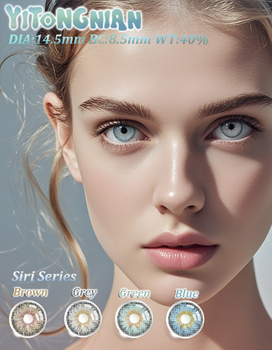
| Total Diameter (DIA) | 14.0 mm, 14.2 mm, 14.5 mm | 14.0mm provides hyper-realistic iris matches; 14.5mm creates the popular enlarging "doll-eye" aesthetic. |
| Base Curve Radius (BC) | 8.50 mm – 8.60 mm | Fits the sag depth of over 92% of Asian, Caucasian, and Latin corneas without dynamic decentration. |
| Water Content (EWC) | 38% – 42% | Prevents desiccation of the precorneal tear film, maximizing tear exchange during natural blinking. |
| Center Thickness (CT) | 0.08 mm (at -3.00D plano baseline) | Ultra-thin center profile designed to balance structural handling integrity against oxygen transmission. |
| Power / Diopter Range | Plano (0.00) to -8.00D (0.25D / 0.50D steps) | Enables optical dispensaries to treat myopia while delivering premium cosmetic transformation. |
| Sterilization Standard | Moist Heat Autoclave (121°C for 20+ min) | Assures a Sterility Assurance Level (SAL) of 10⁻⁶ in validated PP/foil blister packaging. |
3. Global Compliance: The Critical Leap from MDD to EU MDR (2017/745)
The procurement environment for contact lenses has fundamentally shifted. Historical European Medical Devices Directive (MDD 93/42/EEC) certificates are being phased out in favor of the much more demanding Medical Device Regulation (EU MDR 2017/745). Crucially, under MDR Annex XVI, cosmetic and non-corrective contact lenses—historically categorized with fewer requirements in some peripheral markets—are now formally regulated with the identical clinical evaluation, biological safety testing, and Post-Market Clinical Follow-up (PMCF) requirements as corrective lenses.
Importers and brand distributors must recognize that possessing a generic factory certificate is insufficient to clear modern automated customs nodes in Hamburg, Rotterdam, or Long Beach. A compliant manufacturing partner must supply complete Technical Documentation Files (TDF), encompassing:
Biocompatibility & Cytotoxicity (ISO 10993)
Comprehensive in vitro and in vivo testing regimes confirming non-cytotoxicity, non-irritation, and zero systemic toxicity from polymers, unreacted monomers, or print inks.
Sterility Validation (ISO 11137 / ISO 17665)
Parametric release data and biological indicator documentation validating terminal wet-heat autoclave cycles within cleanroom laminar flows.
Accelerated & Real-Time Stability Studies
Documented real-time shelf stability protocols supporting 3-to-5-year expiration dates across dynamic thermal and transit simulations.
UDI & Traceability Protocols
Integration of Unique Device Identification (UDI-DI / UDI-PI) barcoding compliant with the European EUDAMED database and US FDA GUDID infrastructure.
4. Future Procurement Trends: 2025–2030 Strategic Market Outlook
Procurement executives and supply chain directors must adapt to four transformative macroeconomic vectors currently redesigning the competitive landscape of the optical industry:
1. Rapid Shortening of Wear Cycles (The Daily Disposable Surge)
While annual and monthly replacement lenses retain significant market share in the cosmetic beauty segment due to unit economics, consumer sentiment is pivoting toward daily disposable formats. Driven by clinical recommendations regarding bacterial keratitis reduction and convenience, forward-thinking brands are shifting capital expenditure toward multi-pack daily modalities.
2. Sustainable Packaging Architectures
The industry is under unprecedented scrutiny regarding single-use plastics. Procurement programs now mandate eco-conscious secondary packaging, such as recyclable FSC-certified paperboard outer cartons, bio-degradable blister lidding foils, and low-waste slide-out drawer boxes that double as keepsake packaging.
3. Photorealistic Multi-Layer Iris Pigmentation
Flat, opaque prints are obsolete. Contemporary consumers demand layered 3-tone and 4-tone dot matrix printing that mimics human stromal crypts, pupillary ruffs, and soft limbal boundaries. This visual fidelity requires high-definition rotary pad printing machinery coupled with automated optical alignment cameras.
4. Omnichannel Private Labeling & Agile MOQs
The traditional requirement of placing 10,000-unit minimum orders per SKU is dying. Agility is king. Leading manufacturers empower independent brands by offering inventory buffering, in-house visual design consultation, and rapid custom blister sealing down to project-based MOQs starting from 10 to 100 pairs for pilot runs.
5. Manufacturing Ecosystem & Enterprise Advantages
Founded in 2019, Colorlenshub Technology Co., Ltd. has scaled into an elite ocular manufacturing partner, bridging high-volume precision chemistry with bespoke consumer brand incubations across North America, Western Europe, Latin America, and the Middle East.
Our verified operational infrastructure integrates an on-site workforce of 43 specialized professionals spanning optical engineering, automated micro-molding, clinical QC, and export documentation. Unlike pure trading intermediaries, our integrated facility features a 550 m² dedicated operating, warehousing, and cleanroom packaging zone verified via independent on-site audits conducted by SGS Group.
Low-Barrier Pilot Sampling
Test market velocity with minimal capital exposure. In-stock SKUs support agile procurement starting from just 10 pairs per design.
5,000+ Design Library
Immediate access to thousands of pre-engineered patterns: natural tones, dramatic cosplay, toric astigmatic, and photochromic styles.
End-to-End Box & Retail POS
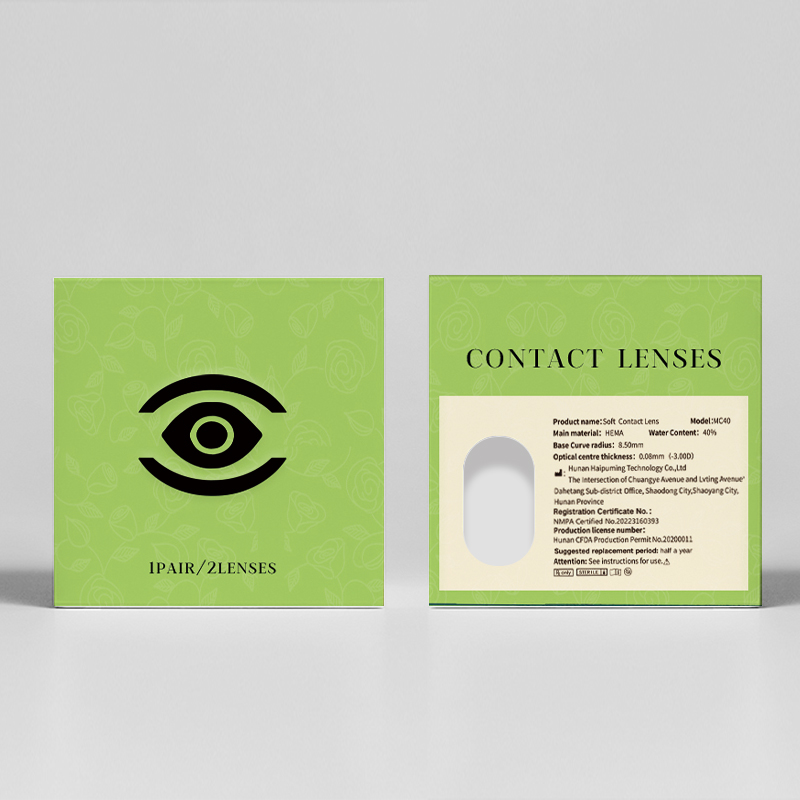
Integrated sourcing spanning sterile foil blister seals, luxury PVC drawer gift boxes, and counter display acrylic stands.
Verified SGS Audit
Authentic on-site physical inspection data, credit index transparent documentation, and strict international quality assurance.
6. Frequently Asked Questions (FAQ) for Strategic Sourcing
Critical operational, technical, and regulatory clarity for import managers, purchasing agents, and medical device distributors:
What is the minimum order quantity (MOQ) for wholesale and OEM orders?
For catalog in-stock designs, orders start from as low as 10 pairs per style to enable retail testing. Custom OEM private labeling, including proprietary branded blisters and printed paperboard cartons, typically starts at 100 to 500 cases depending on the structural complexity of the box.
What lens materials, hydrogel chemistries, and parameters are available?
We primarily utilize medical-grade HEMA hydrogel matrices with balanced 38%–40% water content, 14.0–14.5 mm diameter profiles, 8.5–8.6 mm base curves, and ~0.08 mm center thickness. For premium comfort requirements, select lines are manufactured using high-oxygen silicone hydrogel.
Can you supply corrective prescription (Rx) power in cosmetic designs?
Yes. Our natural daily and yearly collections feature full myopia corrective powers ranging from plano (0.00) down to -8.00D (in 0.25D increments up to -6.00D, and 0.50D increments from -6.00D to -8.00D). We confirm exact SKU diopter availability during quotation.
What international medical certifications and factory audit proofs do you hold?
Our contact lens product lines comply with ISO 13485 medical device quality management protocols and carry CE mark documentation (under applicable directives/regulations). Our facility has passed strict on-site physical inspection and verification by SGS Group.
How do you prevent pigment migration in colored cosmetic contact lenses?
All aesthetic lenses are fabricated utilizing advanced cast molding with automated sandwich encapsulation. Color pigments are chemically bonded within an internal layer of polymer, guaranteeing that dyes never directly touch corneal tissue or palpebral conjunctiva.
What is the typical production and delivery lead time for global shipments?
In-stock orders ship within 3–7 business days via international air express (DHL/FedEx/UPS) or expedited air cargo. Custom OEM production cycles, including structural packaging fabrication and sterile cleanroom sealing, generally require 20–35 business days.