Executive Summary: The Global Transformation to Daily Disposable Color Lenses
The global aesthetic eyewear market is experiencing a structural paradigm shift. Where legacy distribution channels previously prioritized monthly, quarterly, and annual replacement schedules, the B2B supply chain has rapidly consolidated toward daily disposable colored contact lenses (single-use aesthetic lenses). Driven by heightened consumer awareness regarding ocular surface hygiene, acute corneal inflammatory events linked to lens re-use, and the surging influence of high-definition digital beauty trends, professional buyers—ranging from regional optical chain purchasers to fast-growing direct-to-consumer (DTC) beauty conglomerates—are actively revamping their product catalogs.
As a Tier-1 manufacturing partner and verified exporter headquartered in China's specialized optical industrial corridor, Colorlenshub Technology Co., Ltd. produces medical-grade hydrogel and silicone hydrogel solutions engineered to bridge the clinical barrier between medical safety and cosmetic aesthetics. Navigating this sector requires a comprehensive understanding of biocompatible polymers, nano-scale color encapsulation, strict regulatory pathways (such as US FDA 510(k), European MDR 2017/745, and ISO 13485:2016), as well as automated, sterile packaging technologies.
Clinical Truth & Compliance Requirement: Cosmetic colored lenses are classified as Class IIa (EU MDR) and Class II (US FDA) medical devices. Importers must prioritize factories with full physical pigment encasing (sandwich technology) to prevent pigment detachment against the corneal epithelium.
Procurement Trends: How Enterprise Buyers Are Structuring Orders for 2026-2030
B2B optical sourcing has evolved beyond mere unit cost negotiations. Modern procurement directors evaluate supply chain predictability, digital mold precision, multi-axis micro-printing capabilities, and compliance portfolios. Across international markets, procurement strategies have coalesced around three distinct operational vectors:
1. Transition to Silicone Hydrogel (Si-Hy)
Traditional HEMA polymers, while cost-effective, deliver an oxygen transmissibility (Dk/t) hovering between 15 and 28. High-tier private labels increasingly procure third-generation Si-Hy formulas yielding a Dk/t exceeding 100, minimizing end-of-day limbal redness and ocular hypoxia in daily wearers.
2. Hyper-Segmented Color Topologies
The generic "opaque color ring" is obsolete. Wholesale contracts today mandate gradient micro-dot layering with complex dot matrices (0.015mm dot pitch), mimicking biological iris stromal fibers. Three-tone, four-tone, and hybrid translucent tones now command 74% of premium wholesale purchase orders.
3. Integrated Device-Plus-Packaging Bundling
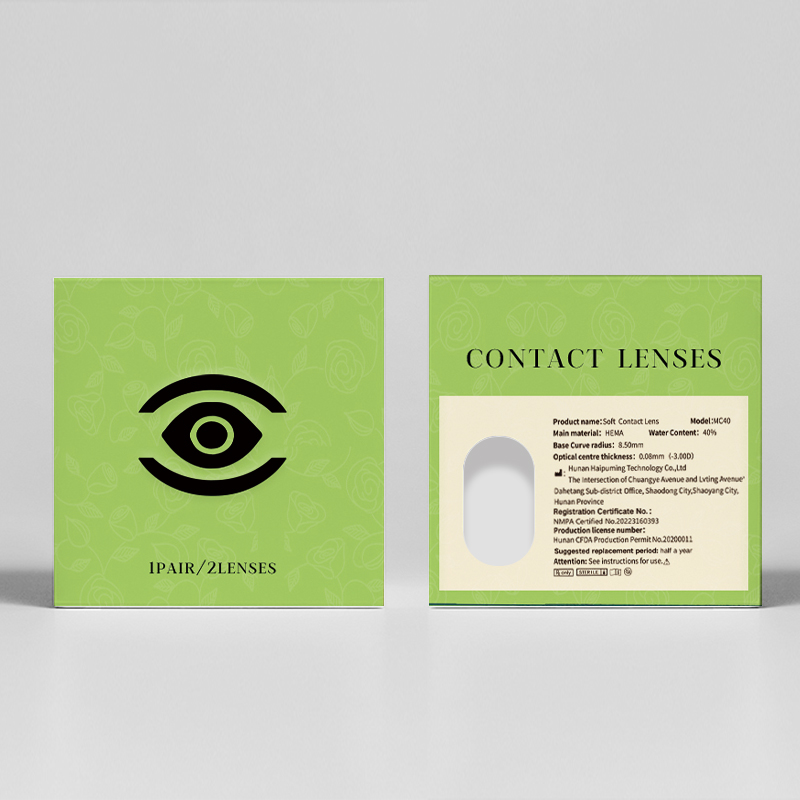
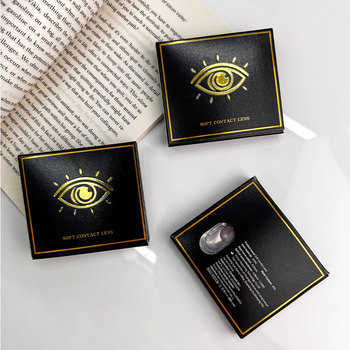
Distributors prefer purchasing from manufacturers capable of supplying finished SKUs: sterile individual blisters seated in bespoke FSC paperboard or rigid PVC pull-out drawer boxes, bundled with high-definition acrylic display units to optimize retail conversion.
Moreover, procurement teams are actively mitigating single-source vulnerability. Rather than relying on disparate brokers, enterprise buyers are signing Master Service Agreements (MSAs) directly with vertically integrated facilities like Colorlens Hub, capturing economies of scale across both high-volume Plano SKUs and broad myopia ranges (spanning plano 0.00 to -8.00D).
Material Evolution & Future Engineering: Navigating 2026-2030 Standards
The technical horizon of daily disposable colored lenses is dictated by polymer synthesis and ocular biocompatibility sciences. Our engineering laboratories track three key developmental arcs currently reshaping industrial specifications:
| Evaluation Parameter | Legacy Daily Hydrogels | Next-Gen Advanced Polymers (Colorlens Hub) | B2B Sourcing Advantage |
|---|---|---|---|
| Base Polymer | Conventional 2-HEMA Hydrogel | Fluoro-Silicone Hydrogel + Phosphorylcholine (MPC) | Maintains corneal cellular respiration during continuous 14-hour wear. |
| Pigment Isolation | Surface Pad-Printing | Patented Sandwich Micro-Encapsulation | Absolute barrier against cytotoxic pigment leaching or friction abrasion. |
| Surface Wettability | Requires Surfactant Wetting Agents | Inherent Moisture Matrix (PVP Embedded) | Suppresses lipid and protein biofilm formation on the optical surface. |
| Optical Asphericity | Standard Spherical Curve | Aberration-Correcting Dual Aspheric Base | Sharpened visual acuity, mitigating peripheral spherical aberrations under low-light conditions. |
Beyond material matrices, intelligent smart-tagging and sustainable manufacturing take center stage. Brand owners are demanding zero-waste injection molding cycles and bio-degradable blister packaging options to comply with aggressive European environmental quotas without compromising sterile barrier performance (BS EN ISO 11607).
Colorlens Hub Institutional Advantage: Built for High-Growth Brands
Since our foundation in 2019, Colorlenshub Technology Co., Ltd. has scaled into a world-class OEM/ODM operation trusted by optical distributor chains and online brands across North America, the European Union, South America, and Australasia. We deliver substantial infrastructure advantages that derisk the global supply chain:
SGS Onsite Audited Facility
Our operational footprint, sanitation infrastructure, air filtration systems (Class 10,000 cleanrooms), and inventory controls have successfully cleared stringent onsite audits conducted by the SGS Group.
Rapid Prototyping & Flexible MOQ
We eliminate barriers to entry. In-stock core catalog colors start from 10 pairs per design, while full bespoke private label box development initiates at low-threshold batch quantities.
End-to-End Regulatory Dossiers
Our regulatory affairs division supports global brand registrations, delivering complete CE, ISO 13485, and MDD conformity dossiers to accelerate market entry in target customs jurisdictions.